Tuesday, July 21, 2009

The Metamorphosis


Now I don’t intend to write about Ovid’s or Kafka’s takes on the subject (I have read the latter, but not the former). Rather, I’d prefer to mull over the little miracles I’ve been personally witnessing over the past few weeks. It started with the single spotting of an abandoned cicada nymph casing. The result of a molt to adulthood, the ugly pinchered skin was left behind, while the newly reborn adult began its aboveground life after more than a decade of blindly burrowing, feeding, and growing under the earth. Split at the top, brittle, hollow, but still completely and perfectly formed, its empty legs clung to the trunk of a tree. I plucked it from its perch, examined it, then discarded it thoughtlessly. Then, over the course of the next few days, I found more and more and more of the molted remnants of immature insects. They were everywhere—I didn’t have to actively search for them. I would stumble upon them stupidly, or they would suddenly appear before me as I went about my day, and I pictured the deluge of cicada nymphs digging their way out of the soil, clawing up a branch, shedding, emerging, drying, and droning off to begin the summer song. Fantastic.

And then there were the tadpoles swimming thickly in every puddle, every pond, every stock tank. In addition to the big fat lethargic resident toads, I’ve been seeing smaller specimens hopping around light sources, looking for bugs attracted to the brightness. Then I put two and two together. Huh.

The birdhouses, too, are full of young’uns. While their transformation may not be quite so dramatic, it’s still miraculous to think about the whole process of fertilization, which leads to an embryo in an egg, which hatches to reveal a hideous pink monstrosity that wobbles and cries through its gaping mouth and then, somehow, sprouts feathers and takes gracefully to the air. One set of fledglings was in the process of leaving the nest. I caught one when it clumsily flew into the garage and took it outside to rescue it from the dogs. It struggled and squirmed in my hand, alert, ready to spread its wings. How?

Change. Metamorphosis. Evolution—in the most literal sense of the word, as well as in the most hated Darwinian terms. But isn’t there something immensely beautiful about the whole thing? Something ugly because something magnificent; pieces are made whole; improvements are achieved. And this is not to play into the whole evolution-is-climbing-towards-the-ultimate-pinnacle (namely, mankind), because I don’t believe that at all. But, still, the drumbeats of progress create extraordinary things. Isn’t a butterfly more stunning than a caterpillar, or, to turn it around, doesn’t the butterfly’s glory make the caterpillar’s life that much more exceptional? Perhaps one completes the other—the yin and the yang.

Growth, anyway. Coming to fruition. Realizing one’s potential. Why are we so afraid of change?

Friday, July 17, 2009

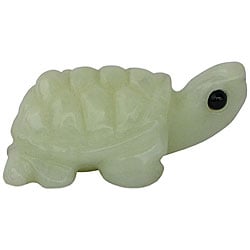
The Curious Adventures of Jade the Tortoise


The other day, while returning from a jaunt in the pasture, I edged along the dog fence and caught sight of something curious. The three hounds were sniffing and pawing at a round object that I at first glance took to be a buffalo chip with the word DADDY written on it (the mind is a curious thing, you know). A closer observation showed that the lump was in fact the shell of a box turtle, branded in large white letters with JADE. I wondered if Jade’s darling pet had gotten loose, but then realized that Jade was probably the turtle’s name. Huh. The dachshund was beginning to gnaw on the edge of the shell, so I hopped the fence to rescue the poor creature. I picked it up to have a better look, noting that its shell was also adorned with glitter nail polish. When I turned it around to face me, the hinge opened a peep and two indignant, glaring red eyes stared back. Then the hinge slammed back shut, and that was that. In that short instant, though, I had noticed that the coloration on the tortoise’s head and feet pointed to the likelihood of its being male. Poor Jade. I hope he’s secure in his masculinity.

Well, I carried Jade safely away from the prying jaws of the dogs and set him down gingerly in the pasture. He seemed bound and determined to stay tightly clamped in his shell, but when I returned later, he was long gone off somewhere—on a new adventure, no doubt. I rather pictured him slowly and determinedly crawling, crawling, crawling back to his home and the little girl who named him, à la The Incredible Journey. Heh.

But I had to wonder exactly where he had been in his travels. The nearest house with children is the better part of a mile away, and they don’t seem like the type who would decorate a pet tortoise and set him free. So where had ol’ Jade come from? And where was he headed off to? I read online that box turtles can live for 40 years or more. That’s a long time for little nondescript reptile. I bet he’s traveled the country; I bet he’s enjoyed the freedom of the open road; I bet he’s sired hundreds of turtle babies (turtlets?) that hatched from their eggs and stumbled out to meet the bright, fast world. By now Jadey-boy’s probably halfway to Arkansas, where he’s meeting up with some long-lost amigos for a Kerouac-style adventure.

I would have snapped a picture of his brief detour and visit, but alas! my digital camera broke and I’m most forlorn. Damn.

Monday, July 13, 2009

Leapin' and Hoppin'


The other night, as it were, I had the opportunity, or perhaps obligation, to ride late at night. Never before had I taken advantage of the brightness of the full moon to enjoy the relative coolness of murky summer nights. The preparation was simple enough—I walked out through the pasture, found and captured a belligerent Brandy, bridled her, and scrambled up bareback. The lights from the house, barn, and telephone pole were distracting, so I turned the mare off towards the blackness of the woods.

And if I ever lose my mouth
All my teeth, north and south
Oh, if I ever lose my mouth
I won’t have to talk no more


She was understandably reluctant and less than thrilled about the midnight excursion, and I soon found that horses’ night vision is not all it’s cracked up to be. Brandy has slightly limited sight in one eye due to an old injury, but that surely couldn’t have accounted for all her stumbling, or the tree she very nearly collided with head-on before I averted disaster and pulled her off to the side. Still, it was a peaceful ride, with the nearly-full moon shining so brilliantly as to make the stars as faint as in the city.

And if I ever lose my eyes
All my colors all run dry
Oh, if I ever lose my eyes
I won’t have to cry no more


Riding back through the treeline, I noticed how once we were fully enclosed in the woods, we were immersed in utter blackness. Yet, looking through the upper limbs or around the bend, I could see the silver light playing on branches, bark, and the rustling grass. The striated ground beneath my horse’s hooves—my God!—moonshadows. And with that realization, the Cat Stevens song started running through my head.

And if I ever lose my hands
Lose my plow, lose my land
Oh, if I ever lose my hands
I won’t have to work no more


From time to time, I would hear the dull pounding of hooves on mud rapidly approaching. Sawyer. He couldn’t bear to let Brandy stray too far away, and whenever she disappeared from his view, he’d call frantically and charge up to make sure she hadn’t, say, fallen into a bottomless pit or been eaten by a rabid tiger. Thus reassured, he would show off by jumping the ditch, tossing his mane with its luxurious blond braids, loping circles, and behaving like a typical lovestruck teen.

And if I ever lose my legs
I won’t moan, and I won’t beg
Oh, if I ever lose my legs
I won’t have to walk no more


And I rode on—a few laps through the pasture, weaving persimmons in the woods, around the arena and roundpen…and that was it. I brushed the horse, turned her out, went inside to take a shower, and went to bed, whereupon I promptly forgot the exhilaration of living purely for the experientialist moment.

I’m being followed by a moonshadow
Moonshadow, moonshadow
Leapin’ and hoppin’ on a moonshadow
Moonshadow, moonshadow

Did it take you long to find me?
I ask the faithful light
Oh, did it take you long to find me?
And are you going to stay the night?

Tuesday, July 7, 2009

Letting Go


Allow me to recall and retell a story I first heard when I was nine years old. It has stayed with me since then, and the refrain will at times run through my head inexplicably. I’m not so certain what the moral is, but there’s certainly a lesson here.

An elderly Greek man lay dying after a long and fulfilling life. He looked around at his devoted family assembled together at his bedside, then he gazed out across the beautiful scenery that characterized his home and all that he had known and loved throughout his many years. What wonderful memories he had accumulated, what experiences, what untold things he had learned! This was the island where his ancestors had lived and died. This was the place where he had spent his boyhood, met his true love, married, and raised his family. In that sea had he worked as a fisherman; through those mountains had he walked and pondered and grown old. He sighed with contentment and resignation, and with a final effort he let his right hand fall to the ground beside his bed. “This is Crete,” he thought, “and I love Crete, and I can never let it go.” So saying, he scooped up a handful of the cool earth and, pulling his clenched fist up to his breast, breathed his last.

And then he was standing at the gates of Heaven. Ornate and gilded, they marked the entrance to a kingdom no mortal has ever known. Upon them was the inscription, “Leave behind all traces of your former life, and then ye may enter into the realm of Everlasting Paradise.” The man moved to step forward, but the gates remained fixed and solid. Then realization dawned upon him, and he looked down at the clay still clutched in his hand. “No,” said he. “This is Crete, and I love Crete, and I will never let it go.”

And then the gates opened, and Saint Peter stepped through. “You have been a good man,” he told the Greek, “and you have well deserved your place in Heaven. But the laws are such that you must cast aside all earthly things before you are allowed to enter through this portal to Eternal Life. Now, free the contents of your hand and join me here.”

“No,” said the man. “If I cannot take it with me, then I will wait outside forever. For this is Crete, and I love Crete, and I will never let it go.”

But then a small boy slipped out from behind Saint Peter’s robe. The old man’s eyes widened in recognition, and then filled with tears. The child was the man’s grandson, who had died when he was only five years old. “Please, Papa,” he spoke. “Won’t you throw away that dirt and come inside to play with me?”

And the man loosened the grip in his fingers and the dust of Crete fell through, and the gates swung wide open, and there was a terrible and awesome light.

And when the man had stepped through and his eyes had adjusted, lo and behold, the island of Crete lay stretched out before him.

Saturday, July 4, 2009

The Least of My People


From time to time hummingbirds fly into our barn by mistake and, disoriented, become trapped despite the wide open doors and windows. They fly higher and higher, frantically beating at the rafters because they instinctively sense that upwards is the way to freedom. The white underside of the roof mimics the pale tones of the sky and further confuses them and they zip back and forth, buzzing pitifully, until they eventually discover the escape route.

An unlucky few, however, don’t find an opening until they collapse from utter exhaustion, literally unable to move and as helpless as a victim of diabetic shock. They crumple to the ground, weak and paralyzed. On several occasions last year we found the fallen birds and, recalling a long-ago presentation at a local nature center, attempted to resuscitate them with sugar water. The task fell to me once, and the hummingbird feeder was brought down. The miniscule creature was cradled in the palm of my hand. It would open its eyes for a moment, then close them again in a pathetic display of hopelessness. I forced its beak into the opening in the middle of the plastic flower and it lay motionless in that position for a few seconds, before withdrawing its head violently. We repeated this procedure a few times, and it soon became clear that the bird was not only drinking, but regaining strength visibly. It puffed itself up and squeaked a few times, then fed on its own. Then it shook, stood up straighter, and whizzed off into the wild blue yonder. It was a beautiful moment.*

I’ve been thinking lately that maybe what we need in our lives is a little compassion. Take the time, reach out, offer a little help or just live and let live. While I’m certainly wont to grasp too hard for a metaphor, the helpless hummingbird could certainly be compared to anyone and everyone we meet on the street, or really any other divine spark of life.

Whatsoever you do to the least of my people, that you do unto me.

--Matthew 25:40

Can we somehow find personal fulfillment through our own kindnesses and good deeds? Religion and prophets would say so. By acts of compassion, we help not only the objects of our kindness, but also ourselves and our souls, if you’ll allow me to get a bit metaphysical here.

(I don’t really know what I’m talking about. Part of it is summer musings, part of it is parroting what I’ve been taught in philosophy books and religion classes. But it’s something to think about, anyway…)

Of course, this is coming from the person who will slam on the brakes to avoid hitting a butterfly.

*The first two paragraphs are a result of what happens when I try to compose a blog post at one in the morning. Melodramatic with pompous, unintelligible diction much?

Saturday, June 27, 2009

Utopia


In the future that we used to imagine
The one they pictured in those old magazines
Their tomorrow-land is so old fashioned
A delusion of the modern dream
But they had a skyway to the city towers
And we're still rocking over stones and tar
I've been crawling down the freeway for hours
I want my fusion-powered flying car
This ain't the modern world that I remember
The one they promised all us boys and girls
This ain't the vision that the artist rendered
What happened to my modern world?
They said my leisure time was gonna be bitchin’
I'd have my holographic TV phone
And we'd be cooking in our One Button kitchen
In our aluminum dymaxion home
With the enlightened ones leading the nations
Bringing peace around the world at last
A utopia of cooperation
Where injustice is a thing of the past
It's just a bunch of big baby boomers
Trying to snatch the last cookie and run
It's such a comfort to the guilty consumer
If Armageddon had already begun
'Cause if the world's a box of chocolate cherries
Then they can use it up and toss it away
They make it post-apocalyptic and scary
To even dream about the future today


--David Wilcox


I’ve had this stuck in my head on and off for months now—ever since I first heard it on the radio. I don’t know much about David Wilcox, but I love this song.

Saturday, June 20, 2009

Bustin' Broncos


I’ve been spending my summer with the horses. Out here in the boonies, there aren’t a lot of opportunities for social interaction, and I’ve been so exhausted from work and so preoccupied with the current events in my life that a drive into town just seems like too much effort at the end of a long day. So most of my time has been spent in the company of equines as opposed to humans, especially at my two jobs as a veterinary assistant and horse trainer.

There’s something cathartic about working with the colts. I tend to think of training as an art form. The rider is the sculptor or painter, and the horse is like a hunk of marble or a blank canvas. Chipping away haphazardly or slopping paint isn’t the way to go about it, and will only result in a poor final product. Instead, great care, dedication, and skill must combine in a labor of love to create something aesthetically pleasing, beautiful, and functional.

And each horse must be treated in a completely different way. They’re like people in that each one has its own personality, set of quirks, and personal preferences. Some get along famously with me: they trust me completely, look to me for companionship, and would do anything I asked of them…but would not respond nearly so well for another person, even going so far as to react violently out of fear or stubbornness. In others, the situation is reversed, and I consider it a success each day if neither of us kills the other. It’s funny that way.

I suppose that, officially, I’m a Professional Horse Trainer. This is a title that I neither want nor feel I deserve. I don’t think of this as a career, only a summer job, a pastime, something I enjoy doing and a learning experience besides. And indeed, I have so much to learn. As with most everything else, it takes a lifetime to even reach past the tip of the iceberg. This ain’t something you can pick up in books—it’s all hands-on, learn-as-you-go-and-hope-that-nothing-terrible-happens-in-the-process. And that’s the joy of it.

Kindness and consistency are imperative, or as the natural horsemanship mantra goes, “be as gentle as possible, but as firm as necessary.” Having “horse sense” is a must, too. Horse sense may be something innate, but much more of it comes from observation and, more important than anything else, common sense. It’s a mindset; it’s thinking like a prey animal; it’s reacting coolly but quickly in times of crisis; it’s deflating potential blow-ups before they occur. If you do things right and your horse has a good mind, you should never have to worry about a Wild West Rodeo bucking fit. Once mutual trust has been established, patience and baby steps yield the best results—in the safest manner.

I could fill up 100 blog posts o r 100 encyclopedia volumes with just the little bit I have experienced and know on the subject, and that still wouldn’t be enough. Yep, there’s a lot to be learned here, and most of it isn’t about horses. It’s about life.

Sunday, June 14, 2009

Thoughts


Last night I got to meet up with some friends from high school, several of whom I hadn’t seen in over a year. It was nice—we ate pizza and caught up on each other’s lives. It’s interesting to see how we’ve diverged into our various major…even those of us who had shared the same interest in biology are now looking at careers in ophthalmology, botany, biological engineering, and veterinary medicine. After dinner and a long debate about how we would split up the bill (too long since some of us had had a decent math class!), we headed off the Barnes & Noble to window shop and continue our conversations.

We gazed with halfhearted interest at the rows of books, wistfully categorizing them into Those We Had All Read in School (Life of Pi, The House of the Spirits), Those We Had Read for Self-Enrichment (One Hundred Years of Solitude, Everything is Illuminated), Those We Wanted to Read (Brave New World, The Dharma Bums), and Those We Should Theoretically Read but Never Would (War and Peace, On the Origin of Species). There was a hint of competitive one-up-manship, as we attempted to impress each other with our literary repertoire. “I wish I had endless time and an endless budget to read all of these books,” I remarked, sweeping my hand in a vague arc across the Fiction section. “Yeah,” replied a pal. We agreed that the tragedy of our condition is multifaceted. First, being Poor College Students, we can’t afford to buy anything (Last week, on a splurge, I spent an entire day’s wages on two books. But you can’t put a price on knowledge, right?). Next, our time is extremely limited. We don’t have the energy to read anything heavy during the school year, and during the summer, all we want to do is sleep. Finally, without the motivation of a grade or the encouragement and guidance of a professor, it’s hard to get interested in the more difficult (but culturally significant) works. So we settle into a state of apathy…and read the comics. Pity.

It was after 10:00 by the time we said our good-byes and the last of us split up to return home. I’ve always liked driving alone on the highway at night, when the faint lights of oncoming traffic off in the distance remind me, for some strange reason, of an amusement park ride. Last night there was very little traffic, however, and as the radio blared melancholy songs of unrequited love, I made the startling realization that I couldn’t see out my rearview mirror. I made a few adjustments before realizing that there were no problems with either my vision or the mirror’s location—there was simply nothing to see. The lay of the land was such that I couldn’t even see the dull, blank purple sky. My view was completely black for the “visible” mile or two behind me. No cars followed, and I could only dimly make out the tail lights of a vehicle far ahead. I was, I realized, completely alone. From time to time I amused (or consoled?) myself by tapping the brakes or flicking on the turn signal, so that the road behind me shone faintly red and proved that I hadn’t gone blind. Meanwhile, my headlights kept the highway directly before me brightly illuminated, while the median on my left and the woods on my right were black, shadowed, and hidden. It’s a one-track road, I thought to myself, bearing me down toward an inevitable conclusion. And sure enough, when my exit materialized out of the darkness, I felt myself signal, brake, and turn out of habit. What other choice did I have? Or, rather, what would happen if I just kept on driving?

But, despite my contemplative mood, I didn’t keep on driving. My only concession to impulse was to stop at the bridge over the creek, park my car, and walk out over the water. There was no moon in sight, but there were no clouds, either, and the stars were brilliant and as distant as ever. Imitating the stars were thousands of flashes of yellow light that moved and blinked and disappeared across the blank landscape. Fireflies. The whole show was reflected in the slow-moving waters of the Pomme de Terre and I watched, spellbound, for a minute or two until I heard the far-off rumble of a car’s engine and, seized by irrational panic, hightailed it back to the safety of my own vehicle to complete the drive home.

Tuesday, June 9, 2009

Buzz buzz


They came in as a plague, a swarm, thousands of them filling the air, circling, alighting. The breeze was thick with the humming of their wings. Awestruck, and not a little bit intimidated, I hid out in the sunroom, snapping pictures through the window, hoping they wouldn’t turn on the nearby dogs and horses. Slowly, as more and more of them landed in a clump and showed no outward signs of aggression, I cautiously approached the tree where they had amassed. As I mastered my nerves, I walked directly underneath the seething cluster, holding my camera inches from the roiling bodies of the insects, fascinated.

They were honeybees, I could see when I got closer, not wasps or other stinging pests. They were of the sort that has been mysteriously disappearing, dying out, baffling scientists and concerning agriculturalists. I was glad to see that this little assembly had survived and set off to found a new colony. Unfortunately, they had picked a bad place to do it. I’ve heard stories of bees making homes in people’s houses, infesting so badly that honey oozes from cracks under the windows and whole walls have to be ripped out to remove the invaders. Then, too, once they are settled the bees become aggressive and will violently defend their territory. A call to the local Nature Center informed us that we had at most a couple of days before the insects changed from docile busybodies to vicious guard dogs.

A beekeeper was summoned, and he was delighted at the opportunity to add to his collection. He informed us that there was a queen in the center of the mass, secreting pheromones to summon the drones. By cutting off the branch he collected the queen and her followers. A few spritzes of hairspray sufficed to cover up the queen’s scent, and several drops of lemongrass oil further attracted the bees to the box he had set up for them. He estimated that there were 20,000 individuals, but while he’s the expert, I suspect this number is grossly inflated. Regardless, he succeeded in taking all but a dozen or so of the insects with him while avoiding the tragedy of anyone getting stung.

Good riddance—now the bees will be put to good use pollinating and producing honey—no need for an exterminator and a pointless eradication. The visual was an interesting display of fecundity; one more experience to add to the list of likely one-in-a-lifetime sights.

Thursday, June 4, 2009

Gravity


Enchanted by the fog that trailed wispily among the waving fields of fescue, proceeding slowly with the setting of the sun and the coming of dusk, I tore myself from my proceedings and ran, child-like, through the tall grass. Surrounded by thick clouds of mist under an inky sky, I took all leave of rationality and plunged into the heart of the sparse woods in the back acre of the pasture. There, broken by the horrible windstorms of last month (classified by experts as “land-based hurricanes), was a giant hickory tree, split in half. A large portion of the trunk had cracked from the main structure, and this was resting on the ground, although oddly still vivid and living, sustaining life from a few slivers of shattered wood that kept it connected to a source of water.

It was onto this broken trunk that I climbed, hoping to gain a better vantage point by grasping at limbs and pulling myself upward. The bark was wet with dew and quite slippery, so I inched along carefully, grabbing handfuls of thin, flexible twigs to steady myself and I progressed along the length of the tree.

It was growing dark by now, and I paused in my journey to survey the gathering fog. In the distance, a pack of coyotes began to howl, a high-pitched, eerie sound. Beneath my feet, large carpenter ants scuttled to and fro, irritated by my disturbance. Moths and beetles flew about my head and crashed into me, falling heavily to the foliage below. Most fascinating, however, were the myriad of fireflies that flashed around me, shimmering, seemingly (and, I suppose, truly) stretching on for miles. I could see thousands of the insects, bobbing and illuminating, like flickering stars in a dying galaxy.

Mesmerized, I turned slowly to take in the scene.

There was a crash. My left arm burned with an intense pain. I was looking skyward. Clenched in my white fists was a torn twig; my elbows were instinctively hooked over opposing portions of tree trunk, with my torso laying in between, suspended above the ground. What had happened was clear—in pivoting, my rubber-soled boots had slipped on the moist bark, sending me for an unintended voyage downward. I had managed to break my fall through a reflexive action. In this instantaneous moment of realization, I happened to see the body of a dead firefly crumple and fall to the ground. A bioluminescent steak graced my left jean leg.

After a moment’s pause to collect my thoughts and make sure that my aching arm wasn’t gushing blood (in fact, there was hardly a scrape), my new concern became the business of extricating myself from the tree. I relaxed, and my right leg found solid ground. That was good. My left leg proved a bit more of a problem. In my descent, the shank of my spur had slid between a crack in two limbs, and the rowel had held fast. Now, with my foot a good four or five feet above the ground, I couldn’t find the leverage to free myself. I tugged and swore, but remained held fast—a paralyzed, ungraceful Rockette. Finally, grumbling all the while, I raised myself back up on my scraped elbows and slid my leg from its trap. Even now, on solid ground, I found myself literally caged on all four sides by huge broken branches and tall clusters of leaves. Large moths began to bombard my face, and I heard the incessant buzzing of mosquitoes in my ears. The excursion had lost all of its appeal and, after a short bout of panicked pacing, I finally crawled out through a small hole in the limbs and returned, disillusioned, homeward.

Romanticism is overrated.