Thursday, September 10, 2009

Roughin' It


I’m a third of the way through a three-week farm-sitting stint in the middle of 225 secluded country acres, and I’ve got to say that (despite the wireless Internet access and very nice modern commodities), I’m starting to miss the comforts of home. Or maybe it’s just that I’m getting sick to death of all of my roommates.

I can hear them scuttling around at night. One was so loud and sounded so big that I was certain that it was a mouse or perhaps a wombat. I was too afraid (and too tired) to turn on the lamp and look. The worst ones are the giant black beetles, which seem to multiply exponentially every night. Naturally, they’re attracted to the light of my computer screen and dive-bomb me when I’m typing late at night. Or they crawl right into my bed, prompting me to abandon my philanthropic “live and let live” philosophy and hurl them forcibly into the nearest wall. Yesterday morning I awoke to discover that a veritable herd of giant black carpenter ants had discovered the orange juice concentrate residue in the sink and taken up residence there. Then there are the plethora of multicolored moths that cling to the walls and ceiling, but they don’t bother me too much. The only thing that really alarmed me was the cockroach that crawled out of my hoodie when I went to pull it over my head. A person can only take so much.

The critters are perfectly welcome, as long as they stay outside. There was a lovely large brown mantis hanging around my door the other day, but Maggie the beagle quickly incapacitated it with a chomp and left it mortally wounded on the deck. Three bright green tree frog sentinels guard the doorway, perfectly spaced and arranged by increasing size. They can stay. Maybe they’ll do away with some of my other visitors.

The wall hangings inside my domicile are nice, too. There’s the cryptic alien cactus landscape and a framed copy of the Standing Orders of St. Thomas’s Hospital (dated 1699-1752 and including such pearls of wisdom as “Patients shall not Swear, nor take God’s name in vain, nor revile, nor strike or beat another, nor steal Meat or Drink, Apparel, or other thing, one from the other” and “no Person shall be received into the House who is visited, or suspected to be visited, with the Plague, Itch, Scald Head or other Infectious diseases”). My personal favorite is the perplexing embroidery of the lovely medieval couple posed in front of their castle; the countess sporting a rather unnerving one-sided wardrobe malfunction.

The mornings are misty and humid as I fumble around with weekend chores, carrying sloppy buckets of wetted oats to the stallions, dishing out the dogs’ morning chicken and rice, and flushing the algae out of the stock tanks. When I arrive late at night after a day at school, the curving country roads are thick with fog and the eyes of cats and raccoons glitter from the creek. And there are frogs everywhere, crossing every square inch of asphalt, a parody of that videogame I used to play. I was never very good at “Frogger,” and frequently got smashed by cars right around Level 2. I’m afraid I’ve taken out quite a few of these guys in the past few nights, too—but I can’t help it. They’re everywhere, and they jump so fast and so far and right underneath the wheels.

But nothing could prepare me for the sight I saw returning home in the late morning last weekend. Driving between two big barbed-wired pastures, I caught a glimpse of movement out of the corner of my eye. I slowed and turned to look, and my jaw fell in what I’m sure was an impressive display of incomprehension and incredulity. Deer aren’t exactly uncommon out here—dead ones dot the highway during breeding season, and there are several does that frequently pay a visit to my own pasture. But a buck is a rare sight—and here were six of them, all big, all sporting a fine rack of antlers, all just on the other side of the fence from me and running together in a tight group. None of them was monstrously large, but they were all very good sized, full grown, and certain welcome trophies for even the most discerning hunter. I don’t know a thing about whitetail social structure, but I’ve never seen a herd of big bucks moving together as a unit. As I watched, they returned my gaze, then loped off and hopped a fence in the distance.

Of course, as with everything, there are frustratingly heartbreaking ethical issues and mounds of stress to deal with out here. But, on the plus side: the work isn’t hard at all, I’ve gotten some pretty cool shots in the misty mornings, and the pay ain’t half bad.

Sunday, September 6, 2009

One of Those Things


Last week, Haley died.

She was 17 years old.

I didn’t know her well at all. I went to school with her, but she was two grades behind me and while I recognized her when I passed her in the hall, we never once exchanged words. She was the daughter of one of the teachers and heavily involved in dance team, theatre, and the bugle corps.

Then she got sick. I remember that clearly, because her decline was broadcasted around the school by sympathetic media students who featured her in a story and teachers who talked sadly about her situation to concerned kids. We watched as she was left confined to a wheelchair, pulled out of school, lost her motor skill, struggled to speak, was put on a respirator…

Her diagnosis, as I recall, was a long, frustrating, and heartbreaking battle. In the end, it was found that she had ALS—Lou Gehrig’s disease. The “typical” ALS patient is a 50-year-old male. Haley was one of the youngest people ever diagnosed with the illness.

The entire situation was extremely sad. She fought hard and hung on and made it a lot longer than anyone expected her to, considering how quickly her body began to fail her.

When I heard the news via Facebook that Haley had passed away, I was stunned. And then I imagined what it would be like to be her—a girl even younger than myself faced so suddenly and absolutely with mortality. Forced to suffer and fade away at what should have been the rising prime of life. Or what about her mother, dealing with the death of her baby? Such a tragedy. Such a loss. Such a waste.

No religious-philosophical musings can approach a “meaning” behind all of this. It is what it is, I guess. But that doesn't make it fair or easy or right. Que serĂ¡, serĂ¡.

But I’m sorry, as we all are when we hear of something so drastically sad. I wish peace and comfort to Haley’s family. And wherever Haley is, I wish her the same.

Tuesday, September 1, 2009

Hi Standerds R Us


Yesterday I had to walk a mile and a half. Or, rather, the instructions were to “walk, jog, run, or whatever” six laps around the track. I thought I’d be clever and alternate between walking and jogging a lap, for a total “running” distance of three-quarters of a mile. I was great at the time, but today I can hardly walk. Damn. I guess I really am in terrible shape.

But I surpassed what nearly every other student did during class (yes, believe it or not, this is a college course). Way to set the bar high. The instructor obviously doesn’t care in the slightest about the course material or the students, and has exceedingly low expectations for our performance. She’s also five months pregnant, and she flat-out told us that if the baby comes early, we’ll all get a guaranteed 100% on our finals. Awesome enticement to study and try hard. Now how am I supposed to care about the material if she doesn’t?

For the most part, I think people will perform at the level they are expected to perform. That is, if they’re “supposed” to do poorly—or even have moderate success—it’s going to end up being a self-fulfilling prophecy. Mediocrity and apathy breed….mediocrity and apathy. Raise the standards, however, and I think a lot of people will rise to the challenge. Give ‘em a push, and they’ll usually learn to fly.

I’m not much of a social theorist, but these to me seem like fairly obvious observable trends. I’m not blaming the fitness teacher—I’m blaming the societal mindset that tells us that this sort of thing is acceptable, normal, par for the course. While technology and our scientific capabilities and knowledge have increased drastically in the past decades, our educational and professional standards have declined (or so I’ve been told, and the limited evidence I’ve seen has supported that). Why? Why do we coddle our students, and then throw them out into the real world to, well, continue with their mediocrity and immature sense of entitlement? Heck, I know I’m a little guilty myself—most of us are. We like the easy life.

But if we don’t challenge ourselves to grow, who will?

Monday, August 24, 2009

Never Cross the Same River Twice


Thus conversing, they entered sufficiently deep into the wood to secure themselves from the observation of any casual passenger along the forest-track. Here they sat down on a luxuriant heap of moss; which, at some epoch of the preceding century, had been a gigantic pine, with its roots and trunk in the darksome shade, and its head aloft in the upper atmosphere. It was a little dell where they had seated themselves, with a leaf-strewn bank rising gently on either side, and a brook flowing through the midst, over a bed of fallen and drowned leaves. The trees impending over it had flung down great branches, from time to time, which choked up the current, and compelled it to form eddies and black depths at some points; while, in its swifter and livelier passages, there appeared a channel-way of pebbles, and brown, sparkling sand. Letting the eyes follow along the course of the stream, they could catch the reflected light from its water, at some short distance within the forest, but soon lost all traces of it amid the bewilderment of tree-trunks and underbrush, and here and there a huge rock, covered over with gray lichens. All these giant trees and boulders of granite seemed intent on making a mystery of the course of this small brook; fearing, perhaps, that, with its never-ceasing loquacity, it should whisper tales out of the heart of the old forest whence it flowed, or mirror its revelations on the smooth surface of a pool. Continually, indeed, as it stole onward, the streamlet kept up a babble, kind, quiet, soothing, but melancholy, like the voice of a young child that was spending its infancy without playfulness, and knew not how to be merry among sad acquaintance and events of sombre hue.

"O brook! O foolish and tiresome little brook!" cried Pearl, after listening awhile to its talk. "Why art thou so sad? Pluck up a spirit, and do not be all the time sighing and murmuring!"

But the brook, in the course of its little lifetime among the forest-trees, had gone through so solemn an experience that it could not help talking about it, and seemed to have nothing else to say. Pearl resembled the brook, inasmuch as the current of her life gushed from a well-spring as mysterious, and had flowed through scenes shadowed as heavily with gloom.
But, unlike the little stream, she danced and sparkled, and prattled airily along her course.

"What does this sad little brook say, mother?" inquired she.

"If
thou hadst a sorrow of thine own, the brook might tell thee of it," answered her mother, "even as it is telling me of mine! But now, Pearl, I hear a footstep along the path, and the noise of one putting aside the branches. I would have thee betake thyself to play, and leave me to speak with him that comes yonder."

The child went singing away, following up the current of the brook, and striving to mingle a more lightsome cadence with its melancholy voice. But the little stream would not be comforted, and still kept telling its unintelligible secret of some very mournful mystery that had happened--or making a prophetic lamentation about something that was yet to happen--within the verge of the dismal forest. So Pearl, who
had enough of shadow in her own little life, chose to break off all acquaintance with this repining brook. She set herself, therefore, to gathering violets and wood-anemones, and some scarlet columbines that she found growing in the crevices of a high rock.

--Nathaniel Hawthorne


Summer, or rather summer vacation, has drawn to a close amidst unseasonably cool weather. It should be in the high nineties this time of year; instead, we’re setting record lows for the month of August. It’s a welcome relief from the usual sweltering, stifling heat and humidity.

I took advantage of this pleasant spell to put in as many hours at work as I could squeeze before tomorrow’s classes. It was nice riding weather—even the four-year-old leopard mare who did her darndest to throw me today (unsuccessfully, I might add) couldn’t make me lose my temper or appreciation for the breeze. And my parents and I went on a trail ride by the river, crossing the Pomme de Terre and enjoying the scenery. Our horses hardly broke a sweat.

Earlier, lost in thought, mourning the many tragedies of this year while still grasping at my remaining blessings, I had pulled the car over at my usual spot at the intersection of two farm roads near my house. I sauntered down the asphalt over the water and leaned over to gaze down. Ten, fifteen feet below the concrete bridge was a shallow, nearly stagnant creek collecting in puddles and dips between large white boulders. Countless minnows appeared in formation as I looked down, scattering as my shadow fell upon them. The schools of tiny fish stretched on as far as I could see—there must have been thousands of individuals within my small viewing frame. On the other side of the drop-off the story was the same: more water, more rocks, more fish. Their bodies flashed silver electric sparks of sunlight whenever they turned just so as the gentle current caught and tipped them. Dull brown minnow-turned-white-sparkle-for-an-instant. A play of light and treat for the senses.


And the water moved languorously on downstream, skirting beaten rocks and lapping the roots of grasses. You can never cross the same river twice, after all.


And what does this say to me? The take-home lesson is that we’ve got to forge ahead wherever the path may lead. We can look back, but we can’t go back. Yes, and so the rippled remembrances of our past billow out and fade to nothingness against the sloshing shoreline—carried softly on white breaking foam, pulled downstream by the torpid current and lost around a bend, but even out of sight still glittering in the sun.

Monday, August 17, 2009

Teh Internetz


As I type this, I’m also watching Dateline/MSNBC’s “To Catch a Predator.” If you haven’t seen it, the premise is this: Decoys portraying teenage girls pose in online chatrooms and lure potential sexual predators into meeting them at their “parents’ house” while they’re “home alone.” It’s a trap, however, and when the alleged pedophile arrives, he is videotaped, humiliated, arrested, and charged with various felonies, oftentimes spending time in jail and ending up permanently on sex offender lists. Many of the intended men had in fact seen previous episodes of the show, but still thought it was worth risking “big trouble” to meet a supposed 13-year-old for a night of pleasure (or, in one guy’s case, cats and Cool Whip).

Right.

The point I’m trying to make is this: The Internet that we all know and love has opened up this window of opportunity for all sorts of people, rapists and criminals alike. But it’s not just that. The World Wide Web is just that—it allows untold volumes of information to be shared at the click of a button. Virtually anyone (at least in the United States) can access it and use it for an unbelievable variety of purposes; good or bad, legal or illegal, beneficial or detrimental.

I’ll admit it. I’ve got a bit of an Internet addiction. I use it for my job (updating websites and marketing horses), for entertainment (I am a moderator on an equine-related blog that provides lots of amusement and sucks up lots of time), for education (I can google anything I want to know), for social networking (Facebook, email, and personal blogs), for journaling (hence this very post). I can’t imagine life without it. How could I, for example, write a paper that required the least bit of research or documentation? I surely can’t be expected to stagger blindly through a library, fumble through the Dewey decimal system, and paw through books completely unrelated to my topic. Egad. How did people live before the late nineties?

The Internet is useful, fun, fascinating, endlessly changing, and I love it. But it’s leading (as social scientist and anyone with a lick of common sense have been saying all along) to a serious identity crisis. When we’re online, who are we?

I usually hesitate to use my real name online, simply for the fact that I’ve managed to piss some people off and there are plenty of people out there who wouldn’t shy at carrying online disagreements to “real life.” Many people choose the same route, and this requires them to create an online pseudonym. But does this “alter” stand solely for the physical individual it represents, or does it take on new characteristics, personality traits, etc.? We’re allowed to rename, recreate, and reinvent ourselves. Am I as Shanna the same as me as Mozart?

Hmm. That’s a lot of rambling and beating around a point I don’t know how to make. I think, mainly, we need to keep track of who we are. The thrill of living an invented online life—or even simply self-publishing to an anonymous worldwide audience—shouldn’t make us throw all caution to the wind. I’m not just talking about Craigslist killers or potential job interviewers, but more about ourselves; our ethos; our psyche (I sure hope those teachers are proud of my fancy lingo). Don’t get carried away in the moment and make a mistake you'll regret, don’t lose track of reason and character, and don’t stay up until two in the morning polishing off a nonsensical blog post. I should take my own advice.

Sunday, August 16, 2009

Burn Baby Burn


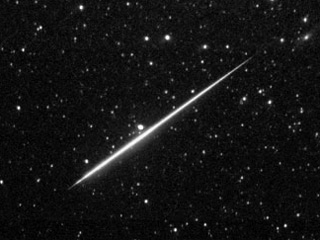
If it hadn’t been for Google’s little illustration on the search engine homepage, I wouldn’t have known that the Perseid Meteor Shower was passing through last week. My mom, ever the Weather Channel addict, was of course already well aware of that fact. So, we went outside and lay down on a blanket on the deck and stared up at the show.

The faintest opaque gray-green of grass below. Inky blackness above, punctuated by darting bats all too near, scuttling by the downspouts. Tiny brilliant pinpricks of effervescent stars winking in the domed firmament. Curdles of the Milky Way glowing dimly in the far-off reaches of the galaxy. The night-sounds were deafening: lowing cattle, gravelly singing insects, occasional hooting crescendos from both great horned and barred owls. Once a pack of coyotes started up in a chorus of eerie shrieks and howls and all the dogs within a few mile radius joined in. The night was still and cool.

And then flashes of light. Brilliant atomic particles streaming madly through the sky, living and burning as passionately as Kerouac caricatures. White sparks, flaming snowballs, illuminated for a minute, straight-shooting star, gone. A blink, an instant, a fading contrail of smoke, nothing. And then another and another, legato interludes, fizz and burn out. Magic lights painted across the sky with rapid strokes of a celestial brush. We stayed out there for an hour and a half before exhaustion overcame me and I retired to bed.

I wanted to learn more about what I was seeing. After perusing Wikipedia (which everyone knows is the single most reliable source for scientific information on the whole Internet), I discovered that “meteors” are simply the light streaks we see in the sky, meteoroids are the objects themselves (ranging in size from dust particle to 10 meters or more across), and meteorites are particles that actually strike the ground. Comets are, technically speaking, giant hunks of junk and ice and rock and stuff that are irregularly shaped, reflect only about 3% of the light that is shown on them, and usually have elliptical orbits. Due to “outgassing,” they shed particles as they travel, and these are what create meteor showers.

And, apparently, “Comet Swift-Tuttle [the very same agent responsible for the Perseids] has been described as ‘the single most dangerous object known to humanity’” by a certain Gerrit L. Verschuur. In the year 4479, there is a 0.0001% chance that the comet will collide with the earth, in which case all life with be completely obliterated. Scary thought. If you’re still alive in 2470 years, watch out.

Sunday, August 9, 2009

Grieving


When it comes to the question, “What happens after death?” I tend to break it into two parts. First, there is the spiritual/religious aspect: Where does the soul (presuming a soul exists) go? I’ve heard countless answers. There are the traditional concepts of Heaven and Hell, which I’ve never found particularly attractive. Someone once explained to me that your last waking (living) moment stretches out infinitely, and you’re left with the eternal experience of the peaceful turning-point of death. Then there’s reincarnation, which is an appealing thought and no more ludicrous or provable than any other theory. Still, the question, with its completely unknowable answer, is enough for me to turn back to my stanch agnosticism, throw my hands up, and say that I neither know nor truly care. Might as well argue how many angels can fit on the head of a pin, for all that.

But when it comes to the physical side of things, the reality is much more definite. Ashes to ashes, dust to dust, indeed, but it’s much more beautiful and vibrant than that. Decay and synthesis. It’s Elton John’s Circle of Life all over again. Yes…and isn’t that a beautiful concept?

One thing: grass and grasshopper. One thing: grasshopper and sparrow. One thing: sparrow and fox. One thing: fox and vulture. One thing, Jared, and its name is fire, burning today as a stalk in the field, tomorrow as a rabbit in its burrow, and the next day as an eleven-year-old girl named Shirin.

The vulture is fox; the fox, grasshopper; the grasshopper, rabbit; the rabbit, girl; the girl, grass. All together, we’re the life of this place, indistinguishable from one another, intermingling in the flow of fire, and the fire is god—not God with a capital
G, but rather one of the gods with a little g. Not the creator of the universe but the animator of this single place. To each of us is given its moment in the blaze, Jared, its spark to be surrendered to another when it’s sent, so that the blaze may go on. None may deny its spark to the general blaze and live forever—not any at all. Certainly not me, for all my giant intellect. Each—each!—is sent to another someday. You are sent, Jared—Louis. You’re on your way, both of you. I too am sent. To the wolf or the cougar or the vulture or the beetles or the grasses, I am sent. I’m sent and I thank you all, grasses in all your forms—fire in all your forms—sparrows and rabbits and mosquitoes and butterflies and salmon and rattlesnakes, for sharing yourselves with me for this time, and I’m bringing it all back, every last atom, paid in full, and I appreciate the loan.

My death will be the life of another, Jared—I swear that to you. And you watch, you come find me, because I’ll be standing again in these grasses and you’ll see me looking through the eyes of the fox and taking the air with the eagle and running in the track of the deer.


--Daniel Quinn


I’m torn in my grief. On the one hand, I think it’s silly. Shorty was, after all, just a horse. Just a horse in the sense that I am just a girl, and really neither of us is particularly significant in the general scheme of things. Really, I must be grieving more for myself and what I have lost (memories, namely), and if this is the most traumatic loss that’s occurred in my life, perhaps I need to get out more and see what it’s like to have a child or best friend die.

But on the other hand, I know there’s far more to it than that. All people are wired in different ways, and, well, I’m wired towards horses. It’s my make-up, my career path, my calling in life. I can’t change it, and I certainly shouldn’t be ashamed of it. And even at that, I suspect I feel the grief less acutely than others might. I’m lucky or cursed enough to have some capacity of emotional detachment.

But for an animal that saw me through years of adolescent angst, who helped to solidify my future goals, who served as a catalyst for my current lifestyle, who was always quiet, always patient, always kindhearted and willing, who won me money and took care of me, who loved peppermints and Twizzlers more than anything else in the world, who was wrapped in an adorable jet black package, who served simultaneously as teacher and pupil, whom I rode at least 2,000 times, if I had to count (and that might be a low estimate), who was faithful, and calm, and athletic, and a good partner and friend—what else can I say? The loss is huge, but life will go on. Already it's getting easier.

The little nondescript grave doesn't look like much. Just a raised area of gray dirt that's packed down hard by the weight of the tractor and scarred by broad tire marks in red clay. No marker adorns the spot as of yet, and no radiant angel stands guard to mark its holy significance and command all passers-by to stop, kneel, and pray. It's shaded in the morning beneath a copse of tall persimmon trees, but in the evening it faces the sunset at the base of a rolling green hill that serves as our hay pasture. Microbes and carrion-eaters have already moved in; the carcass will decompose, disintegrate, turn to earth, and from this earth will spring shoots that grow leafy and heavy with sugars, and this will be harvested, and baled, and utilized as nutrients by the hungry herd that remains.

Yes, and that will suffice.


The wind bids me leave you.
Less hasty am I than the wind, yet I must go.
We wanderers, ever seeking the lonelier way, begin no day where we have ended another day; and no sunrise finds us where sunset left us.
Even while the earth sleeps we travel.
We are the seeds of the tenacious plant, and it is in our ripeness and our fullness of heart that we are given to the wind and are scattered.
Brief were my days among you, and briefer still the words I have spoken.
But should my voice fade in your ears, and my love vanish in your memory, then I will come again,
And with a richer heart and lips more yielding to the spirit will I speak.
Yea, I shall return with the tide,
And though death may hide me, and the greater silence enfold me, yet again will I seek your understanding.
And not in vain will I seek.
If aught I have said is truth, that truth shall reveal itself in a clearer voice, and in words more kin to your thoughts.
I go with the wind, but not down into emptiness;
And if this day is not a fulfillment of your needs and my love, then let it be a promise till another day. Know therefore, that from the greater silence I shall return.
The mist that drifts away at dawn, leaving but dew in the fields, shall rise and gather into a cloud and then fall down in rain.
And not unlike the mist have I been.

.…
This day has ended.
It is closing upon us even as the water-lily upon its own tomorrow.
What was given us here we shall keep,
And if it suffices not, then again must we come together and together stretch our hands unto the giver.
Forget not that I shall come back to you.
A little while, and my longing shall gather dust and foam for another body.
A little while, a moment of rest upon the wind, and another woman shall bear me.
Farewell to you and the youth I have spent with you.
It was but yesterday we met in a dream.
You have sung to me in my aloneness, and I of your longings have built a tower in the sky.
But now our sleep has fled and our dream is over, and it is no longer dawn.
The noontide is upon us and our half waking has turned to fuller day, and we must part.
If in the twilight of memory we should meet once more, we shall speak again together and you shall sing to me a deeper song.
And if our hands should meet in another dream, we shall build another tower in the sky.


--Kahlil Gibran

Friday, August 7, 2009

Requiem for a Black Horse


Just yesterday morning they let me know you were gone
The plans they made put an end to you
I walked out this morning and I wrote down this song
I just can't remember who to send it to

Yesterday morning I had to make the call that every animal owner dreads. Shorty was down, uninterested in food, feverish, and miserable. After a six-month battle with cancer (and after being told he wouldn’t live to see the end of January), it was finally his time. Nobody wants to play God and make the decision to end a loved one’s life, but in times like this, you’ve just got to do the best you know how. So I gave the boy a few pats and hugged his neck and shared some tears with my mom, then I dialed the vet.

By the time she arrived, Shorty was standing, but his breathing was labored and his appetite still very diminished. The bute he had been given had brought his temperature down somewhat, but not enough, and he was hot to the touch. My mom sponged him off with cool water and we offered him all the treats he would take. The vet checked his vitals, then turned to us for the go-ahead. We all agreed there was no point in carrying on. Even if by some miracle we were able to nurse him through this bout as we have the previous two flare-ups, the cancer was certain to rebound again in the near future—perhaps at the hottest time of the day, or in the middle of the night, when no one was around to help him. No, as difficult as it was, it had to be done.

We led him from his stall to the place we had decided he would be buried. At first he was reluctant to move, and we feared we’d have to euthanize him in his stall and then drag him a quarter mile with the tractor to reach the grave. Once we got outside, however, he seemed to liven up. He wanted a drink of water, which we gladly provided, and red clover, which we picked in handfuls and fed to him. Seeing him like that, rallied, was almost enough to make us second-guess our decision. But Shorty has always been a stoic horse, and we knew he was suffering. His eyes were tired. Always the good boy, he walked along obediently, oblivious.

We found a shady spot in the back pasture, and decided that this was the right place, if there can ever be a right place for something like that. My mom said her final goodbyes and left, but I elected to stay, for whatever reason I don’t know. The vet tech held his head while the vet injected a sedative. He drooped and grew limp. I bawled and stroked his muzzle. Then the IV was attached and the lethal cocktail was administered. Halfway through the dose, he crumpled and fell. His eyes rolled and glazed. We all three knelt over him and rubbed him, while the vet spoke comforting words. And then, a few violent but unconscious spasms later, he was gone.

Won't you look down upon me, Jesus
You've got to help me make a stand
You've just got to see me through another day
My body's aching and my time is at hand
And I won't make it any other way


We walked back slowly and silently. The vet had cut a lock of his braided tail, which she discretely slipped to me. I hid it from my mom. A man with a backhoe was summoned, a hole was dug, and that was the end of that. So anticlimactic.

I cried off and on all morning, but I’d already expended so much grief over the past six months of trials that I didn’t have a whole lot left. I was just glad that he didn’t have to suffer; that he went easily, that we wouldn’t have to worry anymore. But just the previous midnight (24 hours before me typing this now) he had felt fine. We had been out to see him, and he was grazing contentedly in the light of the waning moon. Ten hours later, and he was dead. That’s life. Things change in an instant.

While Shorty was cheated out of time he should have had (at 15, he was only halfway through his life expectancy), at least he had the best retirement a horse could ever hope for. He was pampered and spoiled. He had free reign of the barn and could come and go from his stall at will. He was given all the most delicious and expensive treats, and he was checked multiple times a day to make sure he felt well, was eating, and did not have a fever. I gave him all the drugs the vet ordered and bought him all the time we could. Most of the time throughout his ordeal, I think, he actually felt pretty good, if tired. He was living the good life—the one we all deserve.

Been walking my mind to an easy time, my back turned towards the sun
Lord knows when the cold wind blows it'll turn your head around
Well, there's hours of time on the telephone line to talk about things to come
Sweet dreams and flying machines in pieces on the ground

But I make it sound as though Shorty was lucky to have us. While that is true as far as it goes, we were the lucky ones to have him in our lives. He was my first horse, and I got him eight years ago this month. He taught me so much, and tolerated my novice whip-jerk-kick horsemanship. He won me innumerable ribbons, trophies, plaques, halters, saddles, checks, and prizes, besides. Even last year he was still winning pole bendings without even trying. He took care of me in my youthful foolishness, and when I outgrew him, he proved to be a faithful and steady trail horse for my mom. Unflappable, kind-hearted, and quiet, he was lazy as could be with a beginner rider on his back, but a wild spitfire whenever I asked him to run. He knew the difference, and he knew how to deliver exactly what his rider needed. A horse like that—who is simultaneously an athlete and a babysitter—is hard to come by. Shorty truly was a once-in-a-lifetime kind of horse on so many levels. He was a good, good boy.

And there’s more than that, too. Shorty came during a transition period in my life, and he saw me through all seven of my years at Central as I grew and changed completely, throughout adolescence and the upheavals of the teenage years. And he changed the course of my life, too, for he indirectly started me on the path of Veterinary Medicine, and he taught me how to ride and train, and he’s the reason that I now live on 31 gorgeous acres in the country. That’s a big influence for such a little horse. But you can’t measure that unseen quality: heart.

Oh, I've seen fire and I've seen rain
I've seen sunny days that I thought would never end
I've seen lonely times when I could not find a friend
But I always thought that I'd see you again


--James Taylor


For the most part, my mom (who loves the horse even more than I do) and I have been handling the grief as well as can be expected. I only lost it when Buddy started crying for Shorty. Bud came here seven weeks ago as a loaner for me since all of my other horses are, for whatever reason, out of commission (it’s been a really bad year). From the first night of his arrival, he immediately latched onto Shorty, who has always been solitary by nature. Buddy wouldn’t leave his side, however, and whenever another horse came too near, he’d run it off and herd Shorty away from the perceived threat. I’m not one to look for deeper meanings in things or believe in spiritual sentimentalism, but it was almost as though Buddy came as a guardian angel during Shorty’s time of need.

Anyway, as we were leading Shorty to his final resting place, I caught up Bud and put him in Shorty’s stall so he wouldn’t get too nosey or upset. But he just watched out his window and called loudly to his friend as he walked away. And, hours later, when we turned them all out for the night, the first thing Buddy did was run to the spot where he had last seen Shorty, neighing all the while, looking around, ears pricked, distressed, concerned. I hate to anthropomorphize, but it was quite clear what was going on. Anyone who says animals don’t experience emotions and attachment is cold and deluded. The same goes for anyone who claims that, if there is such a thing as a “soul,” only people possess it. Again, that’s sheer arrogance, as far as I’m concerned.

Eventually Buddy quieted and calmed down, although he’d still periodically lift his head and look around for his pal. Yes, Shorty, you’ll be sorely missed. Godspeed, little buddy. And thank you.

Monday, August 3, 2009

Things That Go Chomp in the Night


I found this mysterious flying monstrosity in the barn, flapping around the lights and crash diving into the floor. I only had a chance to snap one picture before one of the dogs discovered it and promptly ate its wings and one of its legs. I threw it outside before she swallowed it whole. Anyone want to hazard a guess to what it is? It looked like a flying mole cricket. Do they fly? (According to Google Images, they do. Huh. Learn something new every day.)

The cricket, of course, was accompanied by a multitude of moths, a bevy of beetles, a congregation of creepy-crawlies (so maybe I’m grasping at straws for alliteration here). Tiny black bugs cover the ground underneath every light source, and fat bloated toads sit in the middle of a swarm, overwhelmed and overfed. You can’t walk outside without getting bombarded by flying insects that tangle in the hair and find their way underneath clothing, winding up smashed and itching.

And there are other nocturnal critters out there, too. Going out to check on the horses at half past midnight, armed with a high beam flashlight (unnecessary with the almost full moon), I spooked up a few meadowlarks settled in the tall grass before my feet. Sweeping my light around, I noticed bright reflecting eyes staring back at me. A chorus of coyotes and a barred owl started up in the distance, adding to the symphony of singing, grinding, and scraping performed by frogs and bugs.

And then Chi-Chi, my dachshund companion, took off barking, hot on the hunt. I aimed my light at her and saw her on the heels of a gray animal about her size. She was yapping and nipping and having a grand old time, while the armadillo (for that’s what it turned out to be) jumped and hopped and tried to scurry away in its haphazard, awkward, and most inefficient manner. I pulled the dog off (much to her offended chagrin) and followed the ‘dillo. It appeared to be mostly blind and mostly stupid, and when I got up close, I simply reached down, grabbed it by the tail, and hauled it into the air. From here, I examined its bumpy pink underbelly (covered in coarse bristly hairs), its thick, plated tail (through which I could feel its terrified pulse), its powerful digging feet (armed with sharp claws but not unlike cloven hooves), its armored back (wet with Chi-Chi’s spit), and its triangular, mouse-eared, pig-eyed head. Not knowing what else to do, I set it back down and it ambled off.

Then I came in and washed my hands, for I’ve heard that armadillos can carry leprosy, in addition to other nasty diseases.

Sunday, July 26, 2009

I Concur


I believe a leaf of grass is no less than the journey-work of the stars,
And the pismire is equally perfect, and a grain of sand, and the egg of the wren,
And the tree-toad is a chef-d’oeuvre for the highest,
And the running blackberry would adorn the parlors of heaven
And the narrowest hinge in my hand puts to scorn all machinery,
And the cow crunching with depress’d head surpasses any statue,
And a mouse is miracle enough to stagger sextillions of infidels.


--Walt Whitman


The simple fact that anything exists at all in the void of Infinity is astounding and mind-boggling, when one really starts thinking about it. Add to that conundrum the complexity and miracle of life, and the whole thing is beyond comprehension or explanation. Not that we don’t try, of course. In a few of my classes last year, I was taught about the structure and diversity of plants and invertebrate animals. I learned, for example, that Queen Anne’s Lace is nothing less than wild carrot. Pull a plant up from the ground and the bitter conical root emerges. Or how about the bdelloid rotifer, which is a multicellular aquatic animal capable of producing copies of itself without need for sexual reproduction? In some species, males have never been discovered, yet females continue to produce eggs which in turn hatch new, fully functioning rotifers. Fascinating. Tidbits such as these greatly increased my already-considerable appreciation for the world at large, and made me once again revert to childhood habits of kneeling in the mud by the creek, digging for signs of writhing nematode worms or tiny side-swimming crustaceans.

They fit together perfectly, you know, their parts. Throughout the eons they have evolved from that initial spark in the primeval soup or mandate of God or what-have-you. And those parts, the chomping mandibles, snapping pinchers, clicking legs, and beating hearts, are in turn composed of carbohydrates and lipids and proteins, long strands of amino acids, rows of nitrogen, oxygen, carbon. And within each molecule atoms, and within each atom whizzing electrons, the fat, torpid neutrons, pulsating protons, and so many particles we have neither named nor seen. And in them, what? Bits of sonic string squirming as frantically as the nematodes, as quantum physics would have it? Unimaginable energy forces? Divinity?

The second we think we’re at the brink of unearthing the final hidden secret of the universe, we’ve discovered the last piece of the jigsaw puzzle, we’re at the brink of understanding all the clockwork of Creation, the proverbial rug is pulled out from beneath our feet and we find that, once again, we know nothing. Things don’t add up. Space, apparently, doesn’t play nice and behave in an orderly fashion. The old laws of physics don’t apply anymore. If there’s a unifying law of science, we’ve yet to find it. Well didst thou speak, indeed, Athena’s wisest son.

And so, with the knowledge we so desperately crave held maddeningly beyond our reach (like the Queen Anne's root on a stick, I suppose), we can choose either to chase it, or perhaps instead to simply sit and bask in its overwhelming beauty. Not that the two are mutually exclusive, of course, but for me I’ll leave physics to the physicists and mathematicians. Biology is interesting, important, and life-saving, but when push comes to shove, I think I’m on Walt’s side. Yessir, let’s all stop for a moment, turn over a pebble, and admire the ants and pillbugs as they scurry away in all their invertebrate glory.