Monday, October 5, 2009

I Dreamt a Dream


I Dreamt a Dream! what can it mean?
And that I was a maiden Queen:
Guarded by an Angel mild;
Witless woe was ne’er beguil'd!
And I wept both night and day
And he wip'd my tears away
And I wept both day and night
And hid from him my hearts delight
So he took his wings and fled:
Then the morn blush'd rosy red:
I dried my tears & arm’d my fears,
With ten thousand shields and spears.
Soon my Angel came again;
I was arm'd, he came in vain:
For the time of youth was fled
And grey hairs were on my head


--William Blake

Last night I had the strangest dream. Rarely do I remember my dreams, but this one came back to me in my early waking moments and I hastened to scribble down notes so I wouldn’t forget. It involved people I had known in high school, at least one college professor, my parents, my employer, and others whom I didn’t know. We were all engaged in some kind of activity—some learning or personal growth exercise. The beginning is murky. Something about…leaning over a barrel of water, with a gleaming horse eye staring back at me and the reflections of hideous caricatures and cruel faces bouncing on and off the surface, with what explanation I cannot fathom.


The culmination of these activities involved a high platform overlooking a creek. The point, as I understood it, was to jump in the water, observe the ecosystem (huge alligator snapping turtles lurked everywhere, but they were totally benign unless provoked), and estimate the volume of the flowing water in gallons. This value would then be compared with the volume of one’s own blood to show how utterly small and insignificant the individual was. I was the first to go, and as I crept down the rocky bank, a cold burst of water spurted out from a dam system underneath the bridge. I whined about the temperature; my friends laughed and splashed cold water at me. Then I waded into the creek and soon the others followed suit.

Following along the creek bed, there was a large building that somewhat resembled a cross between a sunroom and a planetarium. (In fact, I believe the whole thing, creek included, may have been enclosed in a huge warehouse of sorts.) I entered the structure, which was incredibly dark inside. It was surrounded on three sides by windows, and through these was a gorgeous winter scene fit to grace a Christmas card. Silver-blue light shone on a frozen lake, glistening on the tops of show-covered evergreens, bounced from the smooth surfaces of gently sloping white hills. I stood in awe of the beauty for a while, then returned “outside” to the creek. Before, it had been spring or fall, with cool weather but greenery all around. Now snow lay on the ground, although the trees were uncovered and still sported vibrant green leaves. Additionally, the banks were now studded with suburban houses, neatly arranged and looking as though they had always been there. The juxtaposition between the soft blanket of snow and summery foliage and unmarred houses was quite odd, but of course in the sense of the dream it was easily accepted.

I returned to the observation window room. The scene had changed to one of horror. Now a huge building resembling an airport was in view, with what appeared to be a parking lot stretching out before me. Fragments of a broken plane lay in pieces out among a few abandoned cars. Everything was covered in layers of thick ice, solid, inches deep, coating every surface, icicles draping down throughout the deserted carnage scene. What tragedy befell this place? I mused. What disaster occured here; what happened to the people?

Again I went outside; the snow was gone, as was the creek. Now there were simply houses arranged neatly along a plain yellow-lined road.

One final trip to the winter room: The terminal had vanished, replaced by a sea of slushy melting ice. Antarctica, perhaps? The melting of polar ice caps? The coming of summer? The ocean was cold; the ice was broken and floating eerily; night was falling while tiny stars twinkled in the black sky.

I turned to a companion and commented on the changes, the strange disparity between the snow and summer outside, the oddness of the lake/airport/ocean room.

And then my boss the mystic was beside me, and she repeated a snipped of a conversation that we had just yesterday. “Time is not linear, as we imagine it to be. Instead, it is multidimensional.”

And then I was awake, and the snippets of memory were fleeting.

Tuesday, September 29, 2009

Weather


Fall is fast approaching, and through some innate intuition (or, perhaps, because the trees are turning brown, the days are getting shorter, and the nights are getting colder—and because the weatherman and the calendar say so) I can sense the impending season.

This also means that an inexplicable and unavoidable humor change accompanies the shift in temperature. The other day I shuddered from a bad case of the chills and drew myself up tight inside my warm hoodie, thinking that I was coming down with a cold or swine flu, until I realized that the cause of my suffering was entirely external and environmental. The sky was gray; the air was gray; the mood was gray. Fat droplets of foggy mist condensed on every available surface and the ground was soggy; the roads slick. I was irritable and depressed with no good reason, the ill medieval vapors apparently possessing my subconscious. Even the realization of this fact did little to improve my foul mood.

The horses, however, are affected quite differently. Despite a relatively mild summer, they still welcome the cooler shift from hot days. Last week a front came through, bringing with it wild breezes, dark clouds, and torrential rains that flooded the creeks, washed out the roads, shut down traffic and left me confined to my home, unable to pass over the bridges which roiled with dark frothy river water. Before the storm arrived, however, the horses sensed the impending event and perked up, excited. They charged and reeled in the mud, galloping madly from one end of the pasture to the other, bucking and rearing and wheeling like colts. Even Rebel, my retired cripple who generally hobbles pitifully despite a plethora of pain meds, decided to get in on the action and loped about, carrying his head and tail regally like the great horse he once was.

I laughed and watched them play for a while, their antics effectively brightening my mood. Lather, though, as the storm hit and all-too-close flashes of electricity split the sky, I was less than impressed. The rain was pouring down (four inches in as many hours) and I dashed about through the field trying to lure the horses in so they wouldn’t get struck by lightning. This, of course, entailed putting myself at risk as I stomped and slid in the standing water, brandishing a bucket of grain and a leadrope, begging the disgruntled sopping ponies to follow me to safety. They wouldn’t budge except to avoid my grasp, and then they’d return to their standard head-drooping, butt-to-wind posture. Then a bolt struck the ground not a few hundred yards away with a sickening crack, we all jumped and spooked, and I retreated to the safety of the barn post haste.

[This reminds me of the only time in my memory when I can recall truly being scared for my life. It was a night with a storm of twice this magnitude, with wild flashes of bright branching bolts illuminating the inky sky at frequent intervals. The rain was falling so fiercely that all other sounds were drowned out save for the loud crashes and deep rumblings of thunder. Again, I stupidly ran out, blind in the blackness, attempting to jingle in the scared horses. Lightning flashed all around me, but I had made it nearly all the way to my destination when a particularly violent and close bolt pierced the sky, accompanied by an ear-splitting boom and then nothing. The light in the barn I had been using to guide my path was gone (I later learned that the power was out) and I had never felt so vulnerable as in that moment. I was certain that I would be struck and killed, but still I managed to turn and run back to safety, so petrified that I collapsed when I arrived and was nearly sick. Yeah, so not doing that again.]

Well, eventually things calmed down, the rain stopped, crews were able to repair the roads, and the sun came out to dry the earth. Soon the sugar maple trees on Drury’s campus will turn their brilliant shades of red and orange, and then fall, and then we’ll settle in for another winter—and perhaps hibernate in our winter lethargy until spring.

Thursday, September 24, 2009

Freegles


The first beagles showed up several months ago, trotting alongside the highway. They sported collars and tags, but the owner was unconcerned when called and said not to worry about it—they’d find their way back home. Then one day at work another beagle showed up with a little orange cat as a companion. Both were friendly, sweet, and in good health. I posted a “lost and found” ad on Craigslist, but no one claimed them. The dog was microchipped and registered to a breeder in Arkansas, but he never returned phone calls. My boss decided to feed and care for the pair while searching for a suitable home, even going so far as to take them in for surgery. As it turned out, the cat was already spayed, and the beagle was already pregnant. An operation cured that—too many unwanted pets in the world already, and these strays could obviously attest to that. Still, two months later, no one has offered to take them. Both are pretty fantastic animals—young, cute, affectionate, respectful, healthy, house-broken. Huh.

And then, last week, I was driving home with my mom when we noticed a dog shambling down the pavement. I would have kept going, with my failing compassion and growing cynicism, but in a turn of character my mom instructed me to pull over.

Immediately the dog approached us, cowering and scraping the ground and whining pitifully. She slumped into a puddle of loose hide over bones at our feet. The most noticeable aspect of her appearance was her “pot-belly,” or rather, her hugely swollen and distended teats, obviously the result of nursing a recent litter. The rest of her, however, was painfully emaciated, with the flanks drawn up, the ribs lining the barrel like bars of a cage, and the spine jutting up along the top like a ridgeback. The edges of her ears were torn and bloody and covered in miniscule seed ticks, while her tri-colored coat was dull and filthy. Her paws were raw with pink hairless sores from the rough asphalt. All in all, she cut a pitiful picture as she cringed on the ground.

I produced a few packages of the horrible gas station “cheesy peanut butter cracker” variety, and she gratefully snatched and snarfed the offerings whole. All except the last two, that is, for those she carried carefully away, disappearing through underbrush along the road until she found the perfect place to bury them for later, no doubt fearing future famine.

These actions were so heartbreakingly adorable that it was immediately decided that the dog would have to come home at once. She hopped right in the passenger side when encouraged and spent the ride home crawling on top of me, flailing around, making a mess, and generally wrecking the (*cough*) pristine condition of my car.

I named her Luka. She’s a good dog. She stays put and doesn’t bark excessively, unless she’s trailing some real or imagined varmint. She plays with our dachshund and comes with us on trail rides, something we can’t trust our own dogs to do. After getting her wormed and feeding her well, she’s starting to look pretty nice, too. And now it’s time to find a home for her. Someone volunteered, and we’ll see if that goes through. My parents and I will donate money toward her spaying fund for whoever takes her.

Yeah, but I’m kinda gonna miss her.

Oh, and did I mention that I don’t even like dogs?

Friday, September 18, 2009

Lamb to the Slaughter


I saw this news article posted on Facebook last night by a former art teacher. Her response was simply “hmmmm,” and I too found the implications somewhat unsettling.

It’s not that I find the slaughter of the sheep morally reprehensible. While I subscribe to my holier-than-thou vegetarianism, I still begrudgingly support the industry through my choices and actions. And I would have no problem with it whatsoever if the process was carried out humanely (as currently it so seldomly is). But I digress.

The problem I have is what I view as the indoctrination of children. Yes, they’ve got to learn about life and death sometime. Yes, they need to develop responsibility. Yes, they need to know where food comes from, and that the world isn’t sunshine and roses, and that sometimes bad things have to be done for personal benefit (but then again, is the latter something we really want anyone knowing or acting on?). Yes, I think in this case some of the parents may have been naïve and overprotective. But still.

Most children, particularly urban ones who were not raised in a farm setting, would find the idea of the intentional killing of a personal pet abhorrent at best, even if they knew that this was the intent all along. If anything, lots of kids seem to be overly-sentimental and clingy. It’s a developmental phase we all go through. My point is just that the majority of kids, it seems to me, would rather not condone the death of an animal they were so intimately involved with.

I read an update saying that some of the children were emotionally scarred following Marcus’ demise (gee, ya think?). And the headmistress is receiving death threats, and there’s been talk of burning down the school…that, of course, is taking it way too far. Again, I’ve got to reiterate that I don’t think the adults involved in sponsoring the project are evil murderers, but I do think they’re on the callous and irresponsible side.

My problem is this: Ethical issues and responsibility are things that take a lifetime to develop. I don’t think that schoolchildren have the age or experience required to cultivate a real appreciation for and understanding of moral issues this complex. Yes, at some point we all need to be disillusioned with our view of the ideal world, but shouldn’t we postpone the cynicism and disappointment as long as we can, letting kids be kids and breaking the news to them slowly?

This is a real life lesson for the students, isn’t it? Part of it teaches about the circle of life, and the food industry, and the role of agriculture, and the importance of responsibility. But part of it is more sinister: Don’t spare a friend in his time of need if you stand to profit from his loss. Money is more important than relationships. Love is weakness; emotional detachment is strength.

Scary stuff…

Thursday, September 10, 2009

Roughin' It


I’m a third of the way through a three-week farm-sitting stint in the middle of 225 secluded country acres, and I’ve got to say that (despite the wireless Internet access and very nice modern commodities), I’m starting to miss the comforts of home. Or maybe it’s just that I’m getting sick to death of all of my roommates.

I can hear them scuttling around at night. One was so loud and sounded so big that I was certain that it was a mouse or perhaps a wombat. I was too afraid (and too tired) to turn on the lamp and look. The worst ones are the giant black beetles, which seem to multiply exponentially every night. Naturally, they’re attracted to the light of my computer screen and dive-bomb me when I’m typing late at night. Or they crawl right into my bed, prompting me to abandon my philanthropic “live and let live” philosophy and hurl them forcibly into the nearest wall. Yesterday morning I awoke to discover that a veritable herd of giant black carpenter ants had discovered the orange juice concentrate residue in the sink and taken up residence there. Then there are the plethora of multicolored moths that cling to the walls and ceiling, but they don’t bother me too much. The only thing that really alarmed me was the cockroach that crawled out of my hoodie when I went to pull it over my head. A person can only take so much.

The critters are perfectly welcome, as long as they stay outside. There was a lovely large brown mantis hanging around my door the other day, but Maggie the beagle quickly incapacitated it with a chomp and left it mortally wounded on the deck. Three bright green tree frog sentinels guard the doorway, perfectly spaced and arranged by increasing size. They can stay. Maybe they’ll do away with some of my other visitors.

The wall hangings inside my domicile are nice, too. There’s the cryptic alien cactus landscape and a framed copy of the Standing Orders of St. Thomas’s Hospital (dated 1699-1752 and including such pearls of wisdom as “Patients shall not Swear, nor take God’s name in vain, nor revile, nor strike or beat another, nor steal Meat or Drink, Apparel, or other thing, one from the other” and “no Person shall be received into the House who is visited, or suspected to be visited, with the Plague, Itch, Scald Head or other Infectious diseases”). My personal favorite is the perplexing embroidery of the lovely medieval couple posed in front of their castle; the countess sporting a rather unnerving one-sided wardrobe malfunction.

The mornings are misty and humid as I fumble around with weekend chores, carrying sloppy buckets of wetted oats to the stallions, dishing out the dogs’ morning chicken and rice, and flushing the algae out of the stock tanks. When I arrive late at night after a day at school, the curving country roads are thick with fog and the eyes of cats and raccoons glitter from the creek. And there are frogs everywhere, crossing every square inch of asphalt, a parody of that videogame I used to play. I was never very good at “Frogger,” and frequently got smashed by cars right around Level 2. I’m afraid I’ve taken out quite a few of these guys in the past few nights, too—but I can’t help it. They’re everywhere, and they jump so fast and so far and right underneath the wheels.

But nothing could prepare me for the sight I saw returning home in the late morning last weekend. Driving between two big barbed-wired pastures, I caught a glimpse of movement out of the corner of my eye. I slowed and turned to look, and my jaw fell in what I’m sure was an impressive display of incomprehension and incredulity. Deer aren’t exactly uncommon out here—dead ones dot the highway during breeding season, and there are several does that frequently pay a visit to my own pasture. But a buck is a rare sight—and here were six of them, all big, all sporting a fine rack of antlers, all just on the other side of the fence from me and running together in a tight group. None of them was monstrously large, but they were all very good sized, full grown, and certain welcome trophies for even the most discerning hunter. I don’t know a thing about whitetail social structure, but I’ve never seen a herd of big bucks moving together as a unit. As I watched, they returned my gaze, then loped off and hopped a fence in the distance.

Of course, as with everything, there are frustratingly heartbreaking ethical issues and mounds of stress to deal with out here. But, on the plus side: the work isn’t hard at all, I’ve gotten some pretty cool shots in the misty mornings, and the pay ain’t half bad.

Sunday, September 6, 2009

One of Those Things


Last week, Haley died.

She was 17 years old.

I didn’t know her well at all. I went to school with her, but she was two grades behind me and while I recognized her when I passed her in the hall, we never once exchanged words. She was the daughter of one of the teachers and heavily involved in dance team, theatre, and the bugle corps.

Then she got sick. I remember that clearly, because her decline was broadcasted around the school by sympathetic media students who featured her in a story and teachers who talked sadly about her situation to concerned kids. We watched as she was left confined to a wheelchair, pulled out of school, lost her motor skill, struggled to speak, was put on a respirator…

Her diagnosis, as I recall, was a long, frustrating, and heartbreaking battle. In the end, it was found that she had ALS—Lou Gehrig’s disease. The “typical” ALS patient is a 50-year-old male. Haley was one of the youngest people ever diagnosed with the illness.

The entire situation was extremely sad. She fought hard and hung on and made it a lot longer than anyone expected her to, considering how quickly her body began to fail her.

When I heard the news via Facebook that Haley had passed away, I was stunned. And then I imagined what it would be like to be her—a girl even younger than myself faced so suddenly and absolutely with mortality. Forced to suffer and fade away at what should have been the rising prime of life. Or what about her mother, dealing with the death of her baby? Such a tragedy. Such a loss. Such a waste.

No religious-philosophical musings can approach a “meaning” behind all of this. It is what it is, I guess. But that doesn't make it fair or easy or right. Que será, será.

But I’m sorry, as we all are when we hear of something so drastically sad. I wish peace and comfort to Haley’s family. And wherever Haley is, I wish her the same.

Tuesday, September 1, 2009

Hi Standerds R Us


Yesterday I had to walk a mile and a half. Or, rather, the instructions were to “walk, jog, run, or whatever” six laps around the track. I thought I’d be clever and alternate between walking and jogging a lap, for a total “running” distance of three-quarters of a mile. I was great at the time, but today I can hardly walk. Damn. I guess I really am in terrible shape.

But I surpassed what nearly every other student did during class (yes, believe it or not, this is a college course). Way to set the bar high. The instructor obviously doesn’t care in the slightest about the course material or the students, and has exceedingly low expectations for our performance. She’s also five months pregnant, and she flat-out told us that if the baby comes early, we’ll all get a guaranteed 100% on our finals. Awesome enticement to study and try hard. Now how am I supposed to care about the material if she doesn’t?

For the most part, I think people will perform at the level they are expected to perform. That is, if they’re “supposed” to do poorly—or even have moderate success—it’s going to end up being a self-fulfilling prophecy. Mediocrity and apathy breed….mediocrity and apathy. Raise the standards, however, and I think a lot of people will rise to the challenge. Give ‘em a push, and they’ll usually learn to fly.

I’m not much of a social theorist, but these to me seem like fairly obvious observable trends. I’m not blaming the fitness teacher—I’m blaming the societal mindset that tells us that this sort of thing is acceptable, normal, par for the course. While technology and our scientific capabilities and knowledge have increased drastically in the past decades, our educational and professional standards have declined (or so I’ve been told, and the limited evidence I’ve seen has supported that). Why? Why do we coddle our students, and then throw them out into the real world to, well, continue with their mediocrity and immature sense of entitlement? Heck, I know I’m a little guilty myself—most of us are. We like the easy life.

But if we don’t challenge ourselves to grow, who will?

Monday, August 24, 2009

Never Cross the Same River Twice


Thus conversing, they entered sufficiently deep into the wood to secure themselves from the observation of any casual passenger along the forest-track. Here they sat down on a luxuriant heap of moss; which, at some epoch of the preceding century, had been a gigantic pine, with its roots and trunk in the darksome shade, and its head aloft in the upper atmosphere. It was a little dell where they had seated themselves, with a leaf-strewn bank rising gently on either side, and a brook flowing through the midst, over a bed of fallen and drowned leaves. The trees impending over it had flung down great branches, from time to time, which choked up the current, and compelled it to form eddies and black depths at some points; while, in its swifter and livelier passages, there appeared a channel-way of pebbles, and brown, sparkling sand. Letting the eyes follow along the course of the stream, they could catch the reflected light from its water, at some short distance within the forest, but soon lost all traces of it amid the bewilderment of tree-trunks and underbrush, and here and there a huge rock, covered over with gray lichens. All these giant trees and boulders of granite seemed intent on making a mystery of the course of this small brook; fearing, perhaps, that, with its never-ceasing loquacity, it should whisper tales out of the heart of the old forest whence it flowed, or mirror its revelations on the smooth surface of a pool. Continually, indeed, as it stole onward, the streamlet kept up a babble, kind, quiet, soothing, but melancholy, like the voice of a young child that was spending its infancy without playfulness, and knew not how to be merry among sad acquaintance and events of sombre hue.

"O brook! O foolish and tiresome little brook!" cried Pearl, after listening awhile to its talk. "Why art thou so sad? Pluck up a spirit, and do not be all the time sighing and murmuring!"

But the brook, in the course of its little lifetime among the forest-trees, had gone through so solemn an experience that it could not help talking about it, and seemed to have nothing else to say. Pearl resembled the brook, inasmuch as the current of her life gushed from a well-spring as mysterious, and had flowed through scenes shadowed as heavily with gloom.
But, unlike the little stream, she danced and sparkled, and prattled airily along her course.

"What does this sad little brook say, mother?" inquired she.

"If
thou hadst a sorrow of thine own, the brook might tell thee of it," answered her mother, "even as it is telling me of mine! But now, Pearl, I hear a footstep along the path, and the noise of one putting aside the branches. I would have thee betake thyself to play, and leave me to speak with him that comes yonder."

The child went singing away, following up the current of the brook, and striving to mingle a more lightsome cadence with its melancholy voice. But the little stream would not be comforted, and still kept telling its unintelligible secret of some very mournful mystery that had happened--or making a prophetic lamentation about something that was yet to happen--within the verge of the dismal forest. So Pearl, who
had enough of shadow in her own little life, chose to break off all acquaintance with this repining brook. She set herself, therefore, to gathering violets and wood-anemones, and some scarlet columbines that she found growing in the crevices of a high rock.

--Nathaniel Hawthorne


Summer, or rather summer vacation, has drawn to a close amidst unseasonably cool weather. It should be in the high nineties this time of year; instead, we’re setting record lows for the month of August. It’s a welcome relief from the usual sweltering, stifling heat and humidity.

I took advantage of this pleasant spell to put in as many hours at work as I could squeeze before tomorrow’s classes. It was nice riding weather—even the four-year-old leopard mare who did her darndest to throw me today (unsuccessfully, I might add) couldn’t make me lose my temper or appreciation for the breeze. And my parents and I went on a trail ride by the river, crossing the Pomme de Terre and enjoying the scenery. Our horses hardly broke a sweat.

Earlier, lost in thought, mourning the many tragedies of this year while still grasping at my remaining blessings, I had pulled the car over at my usual spot at the intersection of two farm roads near my house. I sauntered down the asphalt over the water and leaned over to gaze down. Ten, fifteen feet below the concrete bridge was a shallow, nearly stagnant creek collecting in puddles and dips between large white boulders. Countless minnows appeared in formation as I looked down, scattering as my shadow fell upon them. The schools of tiny fish stretched on as far as I could see—there must have been thousands of individuals within my small viewing frame. On the other side of the drop-off the story was the same: more water, more rocks, more fish. Their bodies flashed silver electric sparks of sunlight whenever they turned just so as the gentle current caught and tipped them. Dull brown minnow-turned-white-sparkle-for-an-instant. A play of light and treat for the senses.


And the water moved languorously on downstream, skirting beaten rocks and lapping the roots of grasses. You can never cross the same river twice, after all.


And what does this say to me? The take-home lesson is that we’ve got to forge ahead wherever the path may lead. We can look back, but we can’t go back. Yes, and so the rippled remembrances of our past billow out and fade to nothingness against the sloshing shoreline—carried softly on white breaking foam, pulled downstream by the torpid current and lost around a bend, but even out of sight still glittering in the sun.

Monday, August 17, 2009

Teh Internetz


As I type this, I’m also watching Dateline/MSNBC’s “To Catch a Predator.” If you haven’t seen it, the premise is this: Decoys portraying teenage girls pose in online chatrooms and lure potential sexual predators into meeting them at their “parents’ house” while they’re “home alone.” It’s a trap, however, and when the alleged pedophile arrives, he is videotaped, humiliated, arrested, and charged with various felonies, oftentimes spending time in jail and ending up permanently on sex offender lists. Many of the intended men had in fact seen previous episodes of the show, but still thought it was worth risking “big trouble” to meet a supposed 13-year-old for a night of pleasure (or, in one guy’s case, cats and Cool Whip).

Right.

The point I’m trying to make is this: The Internet that we all know and love has opened up this window of opportunity for all sorts of people, rapists and criminals alike. But it’s not just that. The World Wide Web is just that—it allows untold volumes of information to be shared at the click of a button. Virtually anyone (at least in the United States) can access it and use it for an unbelievable variety of purposes; good or bad, legal or illegal, beneficial or detrimental.

I’ll admit it. I’ve got a bit of an Internet addiction. I use it for my job (updating websites and marketing horses), for entertainment (I am a moderator on an equine-related blog that provides lots of amusement and sucks up lots of time), for education (I can google anything I want to know), for social networking (Facebook, email, and personal blogs), for journaling (hence this very post). I can’t imagine life without it. How could I, for example, write a paper that required the least bit of research or documentation? I surely can’t be expected to stagger blindly through a library, fumble through the Dewey decimal system, and paw through books completely unrelated to my topic. Egad. How did people live before the late nineties?

The Internet is useful, fun, fascinating, endlessly changing, and I love it. But it’s leading (as social scientist and anyone with a lick of common sense have been saying all along) to a serious identity crisis. When we’re online, who are we?

I usually hesitate to use my real name online, simply for the fact that I’ve managed to piss some people off and there are plenty of people out there who wouldn’t shy at carrying online disagreements to “real life.” Many people choose the same route, and this requires them to create an online pseudonym. But does this “alter” stand solely for the physical individual it represents, or does it take on new characteristics, personality traits, etc.? We’re allowed to rename, recreate, and reinvent ourselves. Am I as Shanna the same as me as Mozart?

Hmm. That’s a lot of rambling and beating around a point I don’t know how to make. I think, mainly, we need to keep track of who we are. The thrill of living an invented online life—or even simply self-publishing to an anonymous worldwide audience—shouldn’t make us throw all caution to the wind. I’m not just talking about Craigslist killers or potential job interviewers, but more about ourselves; our ethos; our psyche (I sure hope those teachers are proud of my fancy lingo). Don’t get carried away in the moment and make a mistake you'll regret, don’t lose track of reason and character, and don’t stay up until two in the morning polishing off a nonsensical blog post. I should take my own advice.

Sunday, August 16, 2009

Burn Baby Burn


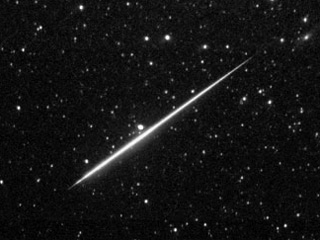
If it hadn’t been for Google’s little illustration on the search engine homepage, I wouldn’t have known that the Perseid Meteor Shower was passing through last week. My mom, ever the Weather Channel addict, was of course already well aware of that fact. So, we went outside and lay down on a blanket on the deck and stared up at the show.

The faintest opaque gray-green of grass below. Inky blackness above, punctuated by darting bats all too near, scuttling by the downspouts. Tiny brilliant pinpricks of effervescent stars winking in the domed firmament. Curdles of the Milky Way glowing dimly in the far-off reaches of the galaxy. The night-sounds were deafening: lowing cattle, gravelly singing insects, occasional hooting crescendos from both great horned and barred owls. Once a pack of coyotes started up in a chorus of eerie shrieks and howls and all the dogs within a few mile radius joined in. The night was still and cool.

And then flashes of light. Brilliant atomic particles streaming madly through the sky, living and burning as passionately as Kerouac caricatures. White sparks, flaming snowballs, illuminated for a minute, straight-shooting star, gone. A blink, an instant, a fading contrail of smoke, nothing. And then another and another, legato interludes, fizz and burn out. Magic lights painted across the sky with rapid strokes of a celestial brush. We stayed out there for an hour and a half before exhaustion overcame me and I retired to bed.

I wanted to learn more about what I was seeing. After perusing Wikipedia (which everyone knows is the single most reliable source for scientific information on the whole Internet), I discovered that “meteors” are simply the light streaks we see in the sky, meteoroids are the objects themselves (ranging in size from dust particle to 10 meters or more across), and meteorites are particles that actually strike the ground. Comets are, technically speaking, giant hunks of junk and ice and rock and stuff that are irregularly shaped, reflect only about 3% of the light that is shown on them, and usually have elliptical orbits. Due to “outgassing,” they shed particles as they travel, and these are what create meteor showers.

And, apparently, “Comet Swift-Tuttle [the very same agent responsible for the Perseids] has been described as ‘the single most dangerous object known to humanity’” by a certain Gerrit L. Verschuur. In the year 4479, there is a 0.0001% chance that the comet will collide with the earth, in which case all life with be completely obliterated. Scary thought. If you’re still alive in 2470 years, watch out.